Uninsured: When the Safety Net Breaks
A film by David Gelber
In the past two years, a record number of Americans have lost their homes due to hurricanes, floods, wildfires, severe rainstorms or hail, and windstorms. The pace and severity of these climate driven natural catastrophes is accelerating. In many regions, insurance premiums are soaring—or insurance is disappearing altogether. A new term has entered the American vocabulary: “insurance deserts,” where homeowners and businesses can no longer obtain affordable, comprehensive coverage.
Climate scientists are unequivocal: extreme weather will intensify. Increasingly, insurance industry leaders are saying the same—some warning privately that the system itself is under existential strain.
What happens when the mechanism designed to absorb risk can no longer do so?
The Project
We propose a series of cinematic documentaries that clearly and viscerally reveal the human and economic consequences of this unfold ing crisis.
Despite the scale of the threat, most Americans have not yet grasped its severity or its underlying causes. Coverage of individual disasters is often vivid, but fragmented—rarely connecting the dots between climate change, the accelerating frequency of catastrophic events, and the growing instability of the insurance system that underpins the economy. This series will make those connections unavoidable.
This proposal is, most of all, the brainchild of David Gelber, who spent 20 years as a producer at 60 Minutes and was Executive Producer of the Emmy Award–winning series Years of Living Dangerously, widely regarded as one of the most powerful documentary series ever produced on climate change.
The Approach
Over a 12-month period, we will produce a series of documentaries, each about a half-hour long, focused on a major extreme weather event.
We will follow families and communities from the onset of disaster through its aftermath—capturing not just the destruction, but the long tail of consequences: displacement, financial strain, and the struggle to rebuild in an increasingly uncertain future.
Each episode will focus on a different type of catastrophe—floods, wildfires, droughts, windstorms—across diverse regions of the United States. Individually, these films will be powerful. Together, they will re- veal a larger, unmistakable pattern: a system under mounting stress. We already have distribution options that will ensure that the series reaches a large audience.
The Insurance Story
Running through every episode will be a deeper, less visible narrative: the growing strain on the insurance industry itself. Insurers are the “canaries in the coal mine” of climate risk. But unlike miners, they cannot simply exit when danger becomes clear. Instead, they are retreating selectively—raising rates, withdrawing coverage, and leaving entire regions exposed.
What does this mean for homeowners, for financial markets, and for the broader economy?
We will answer that question by telling the stories of what happens
when people who thought they were protected discover they’re not—and what that means for everyone else.
We’ll track how insurers respond in real time—during and after catastrophic events—and examine the widening gap between what the industry understands and what it is able —or willing —to do.
Our editorial guidance will include two of the nation’s leading experts on climate risk and insurance:
ï Dave Jones, former California Insurance Commissioner, now Director of the Climate Risk Initiative at UC Berkeley School of Law
ï Dr. Alice Hill, senior fellow at the Council on Foreign Relations
The Pilot
We’ll begin with a pilot episode examining the Altadena Fire in the foothills of Los Angeles, one of the costliest extreme weather events of 2025. The New Yorker’s Bill McKibben will be the correspondent for this episode. He’ll be in Los Angeles to tell the Altadena story. He’ll work closely with Professor Dave Jones, former California Insurance Commissioner and current director of the Climate Risk Initiative at UC Berkeley. Jones has cited the Altadena fire as a prime example of the “uninsurable future” created by the climate crisis.
The fire destroyed approximately 10,000 homes, including a devastating share of Altadena’s historically Black community, and exposed the growing dangers of the wildland–urban interface, where development
meets increasingly volatile landscapes.
This story is not only about loss. It is about vulnerability—and who bears it.
Why Now?
This series would have been important at any point over the past 10 years. Insurers have gone from absorbing roughly $100 billion to now $148 billion in annual weather-related losses.
But the window for understanding—and responding—is closing. We are entering a period of intensified warming. Forecasts from the National Oceanic and Atmospheric Administration (NOAA) and the World Meteorological Organization suggest the coming year could be the hottest on record, increasing the likelihood of severe flooding, pro- longed drought, and large-scale wildfires.
The risks are no longer theoretical. They are landing in devastating losses and compounding, accelerating, and outpacing the systems designed to manage them.
The Goal
Our goal is simple: to make this crisis visible, comprehensible, and impossible to ignore.
Because when insurance fails, the consequences do not remain confined to one industry. They ripple outward—through housing markets, banking systems, municipal budgets, and ultimately, the stability of the broader economy.
This is not just a climate story. It is a story about systemic risk that threatens our way of life.
And yet, despite this risk, one which grows more threatening every year, media coverage of it is at a low ebb. That’s why we’re committed to rekindling public awareness of the greatest threat we face.
The Team
 David Gelber – Executive Producer
Award-winning producer at 60 MINUTES for 20 years, and Executive Producer of Peter Jennings Reporting at ABC News for three years. He was the Executive Producer of the Emmy Award-winning Showtime documentary Years of Living Dangerously, acclaimed as one of the finest documentary series on climate change ever produced.
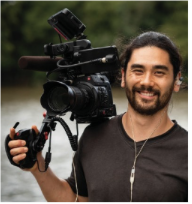 Sasha Schell – Producer and Camera
Documentary filmmaker and open-source investigator at the Berkeley Human Rights Center. His work blends digital investigative methods and traditional reporting. He spent 3 years at PBS FRONTLINE investigating conflicts in Syria and Afghanistan.
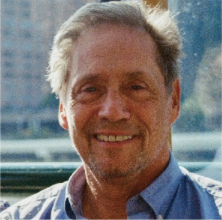 Jon Meyersohn – Producer
Award-winning producer and director of television documentaries. Beginning at CBS News and ABC News. Jon has produced in-depth documentary series for History, Vice, National Geographic, CBS News, and Paramount+. He worked closely with David on Years of Living Dangerously.
 Tracy Wholf – Producer
Award-winning journalist and senior producer reporting on climate, energy policy, sports and much more for CBS News, ABC News, ESPN, and PBS Newshour.
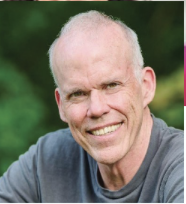 Bill McKibben – Correspondent
Bill McKibben is an American environmentalist, author, and journalist who has written extensively on the impacts of global warming. His most recent book, Here Comes the Sun (2025) is about the state of the environmental challenges facing humanity and future prospects. Time Magazine has described Bill as “the world’s best green journalist.”
Associated Members
Jonathan Meyersohn, Producer
SEE MEMBER PROFILE